UNICEF Rights Respecting
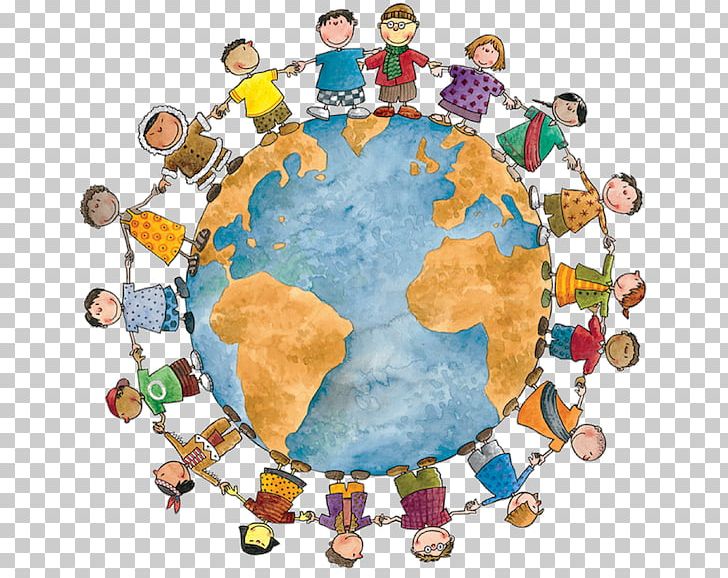
Queensmead are proud to have achieved the Gold UNICEF Rights Respecting School Award. Children’s rights are at the heart of everything that Queensmead does and tries to achieve. Through this, we increase awareness of children’s rights locally and globally as well as clearly demonstrate the promotion of British Values.
'UNICEF works with schools in the UK to create safe and inspiring places to learn, where children are respected, their talents are nurtured, and they are able to thrive. Our Rights Respecting Schools Award embeds these values in daily school life and gives children the best chance to lead happy, healthy lives and to be responsible, active citizens.'
UNICEF
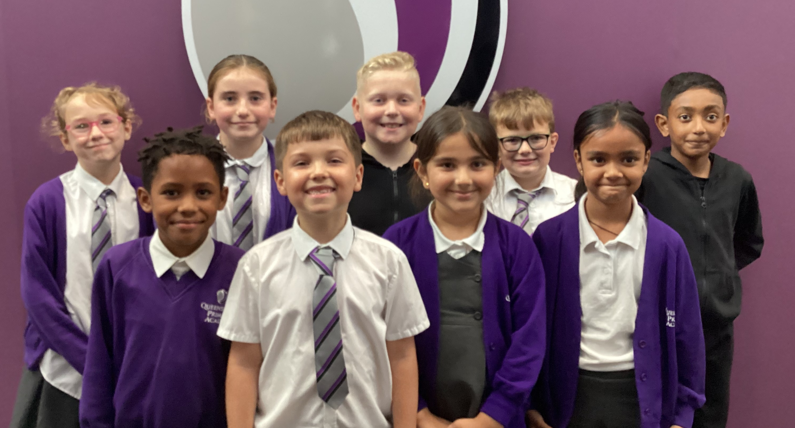
Our Rights Respecting School Council members
The UN’s list of children’s rights is a focus in every classroom. Every classroom also has a Classroom Charter which reflects the rights that each class is promoting and how they are going to do this. This is agreed with the children during induction week. The charter can be added to throughout the year, in response to events.
Each curriculum topic includes links to children’s rights. Classroom displays have vocabulary associated with children’s rights included. Within the award we are also working on making our community links more sustainable.

What is a Rights Respecting School?
UNICEF (United Nations Children’s Fund) is the organisation working specifically for children and their rights. Its mission is to campaign for the protection of children’s rights in order to meet children’s basic needs and empower them to realise their full potential.
The Rights Respecting Schools Award is granted to schools that show commitment to promoting and realising children’s rights and encouraging adults, children and young people to respect the rights of others in school. Gold is the highest accolade given by UNICEF UK and shows a deep and thorough commitment to children’s rights at all levels of school life. There are over 600 schools across England, Scotland, Northern Ireland and Wales that have received Gold. In a rights respecting school, children learn about their rights and responsibilities. Children learn to associate rights with needs and distinguish between their rights and ‘wants’. They learn that if they have rights, they need to respect the rights of others.
Why are children learning about their rights at school?
In signing the UNCRC all Governments have a responsibility to make both children and adults aware of these rights. There are 42 rights of a child (articles) in the convention covering things such as; children having the right to education (article 27) and children have the right to be protected at all times (article 19).
What is meant by ‘rights’?
These are not the same as ‘wants’. Rights are the basic human needs and values that apply or should apply to everyone.
Does the UNCRC talk about responsibilities?
Yes, with rights come responsibilities. These include:
For children: the responsibility to respect the rights of others.
For parents: to respect and provide for the rights of their children.
For governments: to support families and to respect and provide for the rights of children.
What about children's respect for the rights of others?
Research has shown that when children are taught in school about their rights and responsibilities under the UNCRC, they are more respecting of the rights of others. Children who have learnt about their rights and responsibilities have:
- A better understanding of what it means to have rights and responsibilities
- A more positive attitude to school
- Better relationships with their classmates and teachers
- Higher self-esteem
- An increased awareness of how to be a global citizen
The aim of both RRS and the school is to help children achieve their potential and become responsible citizens. What is taught in the RRS curriculum helps children learn respect for self, others, critical thinking skills and informed decision-making.
Will children take advantage of adults if they are taught about their rights?
It is made clear that children not only have rights, but also the responsibility to respect the rights of others. That includes respect for parents, their values and culture. The Convention recognises the central importance of parents. It says that the government must respect the responsibility of parents for providing appropriate guidance for their children, including how children shall exercise their rights.
How can parents support their child to learn about the Convention at home?
- Take the time to ask your child what he/she has learnt recently regarding children’s rights and responsibilities.
- Discuss the ideas learned in class, and try to think of examples from your own experiences, or from the media, of rights being respected or denied.
- Discuss how your child or your family can promote respect for rights, or help those whose rights have been violated.
- Model using rights and responsibility language with your children.
- Ask your child’s opinion on children’s rights.
The UNICEF Rights Respecting School Award is awarded to schools who demonstrate that they have children's rights at the centre of everything they do.
Accreditation lasts for 2 years, after which point an assessor re-visits to re-assess the school.